Slatewind Gomoku
by ZokoGames Studio
Play nowStarts in your browserNo download needed
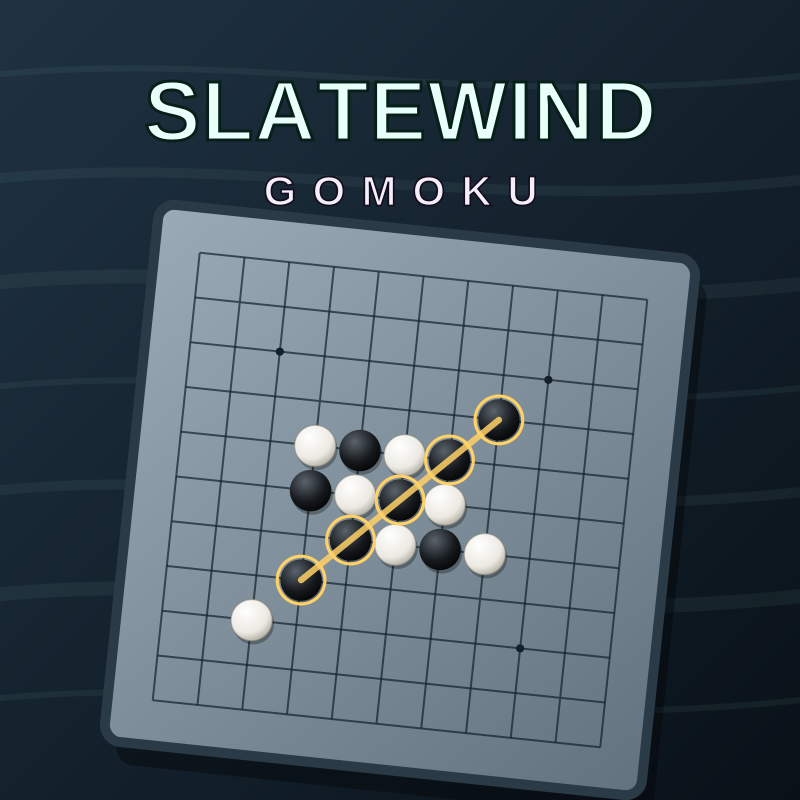
Slatewind Gomoku
Gomoku, five in a row, on a 15x15 or 19x19 board against a five-level computer or a friend on one device, with free-style, exactly-five and swap openings.
- Works on phone
- Saves progress
- Released
- Version 1
- Works on
- Browser (desktop, mobile, tablet)
Slatewind Gomoku game guide
How to play Slatewind Gomoku
- Keyboard and mouse
- Touch
- Choose New game, then your opponent (the computer or a second player), your colour and level, the board size, the winning line and the opening.
- Tap or click an empty point to place a stone. With “Tap twice to place” on, the first tap marks the point and the second places the stone.
- Make five in a row before your opponent does.
Controls
- Mouse / touch: tap a point to place a stone; pinch or scroll to zoom and drag to move the zoomed board; on a wide screen tap a move in the move list to look back at it
- Keyboard: ←↑↓→ move the cursor, Enter or Space places a stone, U undo, H hint, Z zoom, N move numbers, Home / End and [ / ] step through the moves
- Buttons: Undo, Hint, Zoom, More (resign, new game, move numbers, stone patterns, high contrast, tap twice to place, rules) and the move replay ←↑↓→
- P / ESC: pause, M: mute
Slatewind Gomoku tips and strategy
- Never allow an open four. Four stones with both ends free cannot be stopped, so block an open three before it becomes one.
- Make two threats at once. A move that makes a four and an open three, or two open threes, wins the game.
- Play near the centre. Keep your stones connected: lines that run through several of your stones build threats fastest.
- Use forced replies. When you have a four, your opponent must block it. Use those forced moves to set up your next threat.
- Learn from the Master. Use Hint to see its suggestion, Undo to take a move back, and the move list to replay the game.
- Try the other rules. Exactly five makes long lines useless, and swap after 3 balances the first player's advantage.
- Zoom for the big board. On a 19x19 board, pinch or scroll to zoom and drag to look around, or turn on move numbers to follow the game.
About Slatewind Gomoku
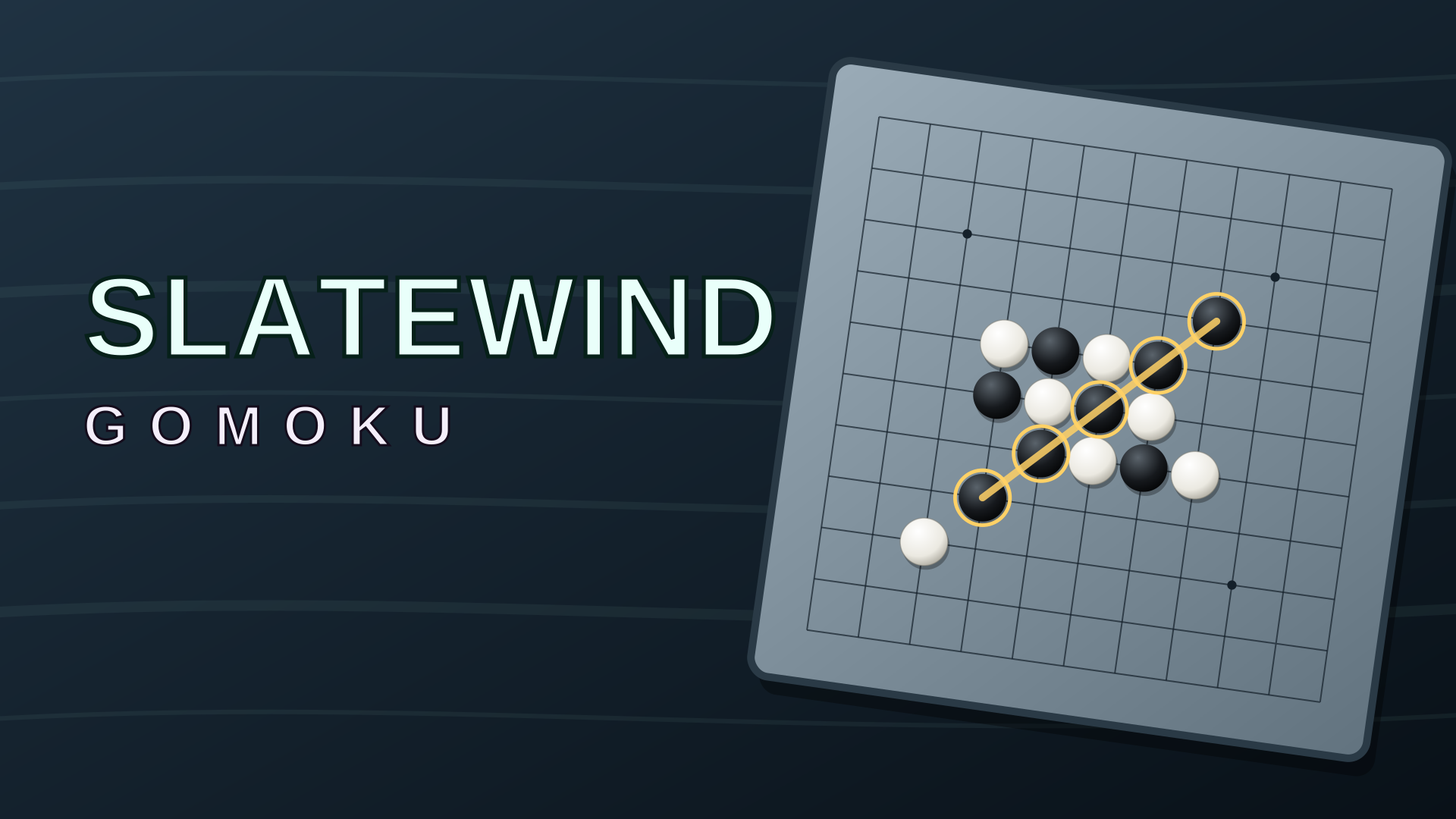
Slatewind Gomoku is the classic game of five in a row, played with stones on a slate board. Take turns placing stones and be the first to make an unbroken line of five, across, down or diagonally. Play the computer at one of five levels or a friend on the same device.
Rules
- The board: 15 by 15 points, or 19 by 19 if you choose. Stones go on the points where the lines cross and never move once placed.
- Turns: Black moves first, then the players alternate, one stone at a time.
- Winning: the first player to make an unbroken line of five of their stones horizontally, vertically or diagonally wins. If the board fills up first, the game is a draw.
- Five or more (free-style, the default): a line of six or more stones also wins.
- Exactly five: only a line of exactly five wins; a line of six or more, an overline, does not count, for either player.
- Swap after 3 (optional): Black has an advantage in the first moves, so the first player places two black stones and one white stone, and the other player then chooses which colour to play. White moves next.
The computer
Five levels: Beginner and Casual look one move ahead (Beginner often overlooks your threats); Club searches a few moves deep and spots forced wins made of fours; Strong and Master read deeper, search for sequences of fours and open threes that cannot be stopped, and check every move against your own forcing attacks. Master always completes a five when it can and never misses a five, a four or an open three of yours. The computer thinks in the background, so the board stays responsive. Your record (played, won, drawn, lost and your winning streak) is kept for each level, and a game in progress is saved after every move.
Tips and strategy
- An open four, four stones with both ends free, cannot be stopped. Block an open three before it becomes one.
- A move that makes two threats at once, such as a four and an open three, or two open threes, wins the game.
- Play near the centre and keep your stones connected: lines that run through several of your stones build threats fastest.
- When you have a four, your opponent must block it. Use those forced replies to set up your next threat.
- Use Hint to see the Master's suggestion, Undo to take a move back, and the move list to replay the game.
Details
- Technology
- HTML5
- Orientation
- Landscape or portrait
- Languages
- English
- Features
- Saves progress · Works on iPhone and iPad
- Controls
- ←
- ↑
- ↓
- →
- Enter
- Space
- ESC
Slatewind Gomoku features
- Two board sizes. A 15x15 or a 19x19 board of slate with stones that stay where they are placed.
- Free-style or exactly five. Five or more in a row win by default, or switch to exactly five so that a line of six or more does not count.
- Swap after 3. An optional opening where the first player places two black stones and one white, and the other player chooses a colour.
- Five computer levels. From Beginner, which often misses your threats, to Master, which reads forcing sequences of fours and threes and never misses a five, a four or an open three. Each level beats the one below it, and the computer thinks in the background.
- Two players on one device. Pass the device between turns, with undo and the swap opening for two players too.
- Clear to read. The winning line is highlighted, with optional move numbers, stone patterns and a high-contrast mode, so nothing depends on colour alone.
- Zoom and pan. Pinch or scroll to zoom and drag the board, with a tap-twice option that marks the point first and places the stone second.
- Hints, undo and replay. Ask for a hint, take a move back, and step through the move list to look back at any position.
- Plays with any input. Touch, mouse or keyboard, with every move and every four or open three announced for screen readers.
- Saved games and records. A game in progress is saved after every move, and your games played, won, drawn and lost and your winning streak are kept for each level.
- Works offline. Save it for offline play once it has loaded.
Questions about Slatewind Gomoku
Which rules does Slatewind Gomoku use?
Free-style by default: five or more stones in a row win. You can switch to exactly five, where a line of six or more does not count, choose a 19x19 board instead of 15x15, and play with the swap opening.
What is the swap opening?
Black has an advantage in the opening, so with Swap after 3 the first player places two black stones and one white stone, and the other player then picks a colour. White moves next. Against the computer, choosing Black means you place the three stones and the computer chooses.
What are a four and an open three?
A four is four stones that make five with one more stone; your opponent must block it at once. An open three is three stones that can become a four with both ends open, which cannot be stopped, so it must be blocked early.
How strong is the computer?
There are five levels, from Beginner, which often misses your threats, to Master, which reads forcing sequences of fours and threes and never misses a five, a four or an open three. Measured over paired games, every level beats the one below it.
Can two people play on one device?
Yes. Choose Two players in the setup and pass the device between turns. Undo takes back one move, and the swap opening works for two players too.
Can I play with a keyboard or a screen reader?
Yes. The arrow keys move a cursor over the board, Enter places a stone, every move and every four or open three is announced, and there are options for stone patterns, move numbers and high contrast so nothing depends on colour alone.
Updates
Version 1Live now
Version 1Live now
Every update passes our automatic build checks before it goes live.
Guide: Gomoku strategy: open threes, fours, double threats and basic defence
Play on your phone
Point your phone camera at the code to open this game there.