Cinderbay Dominoes
by ZokoGames Studio
Play nowStarts in your browserNo download needed
Cinderbay Dominoes
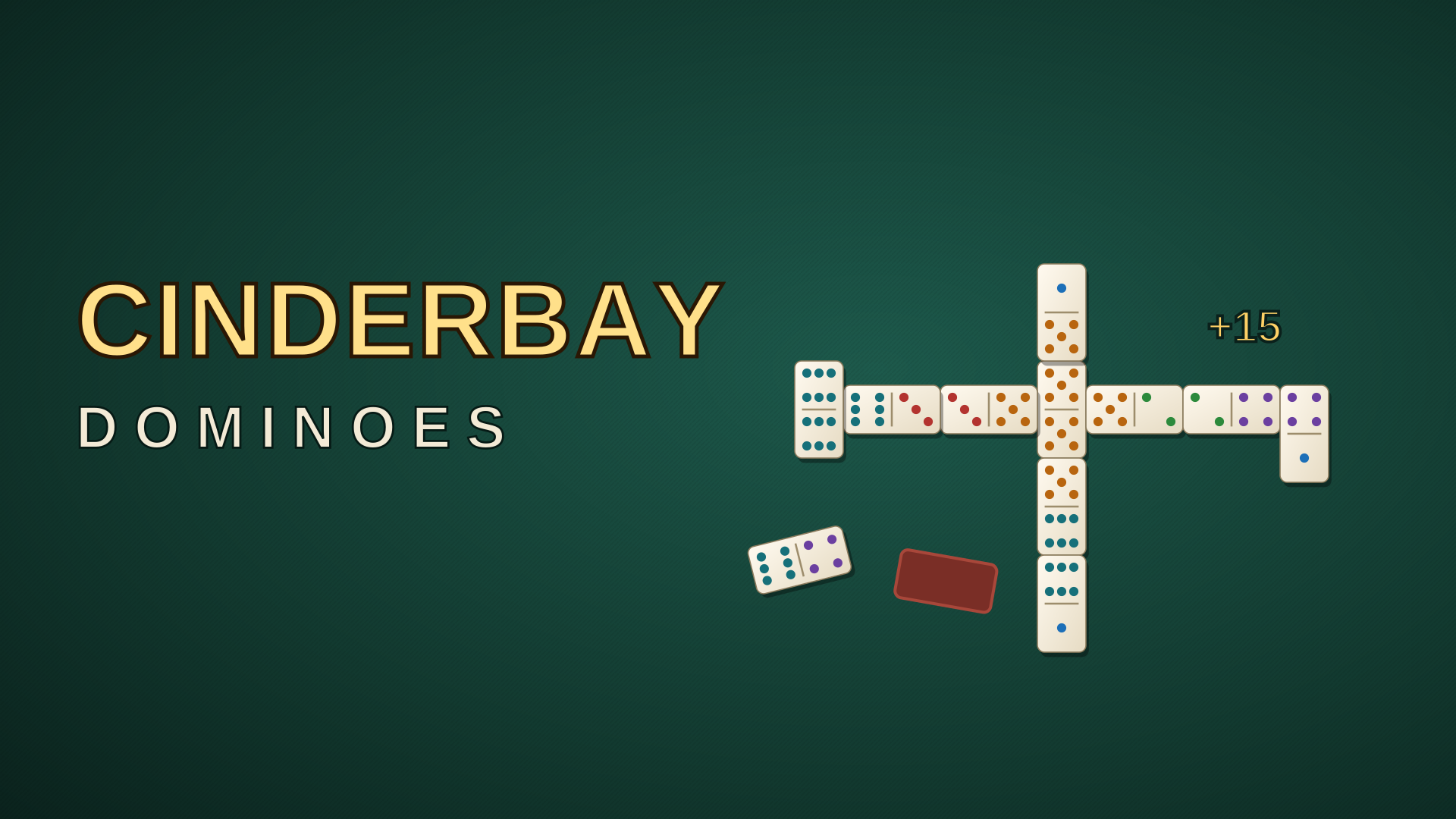
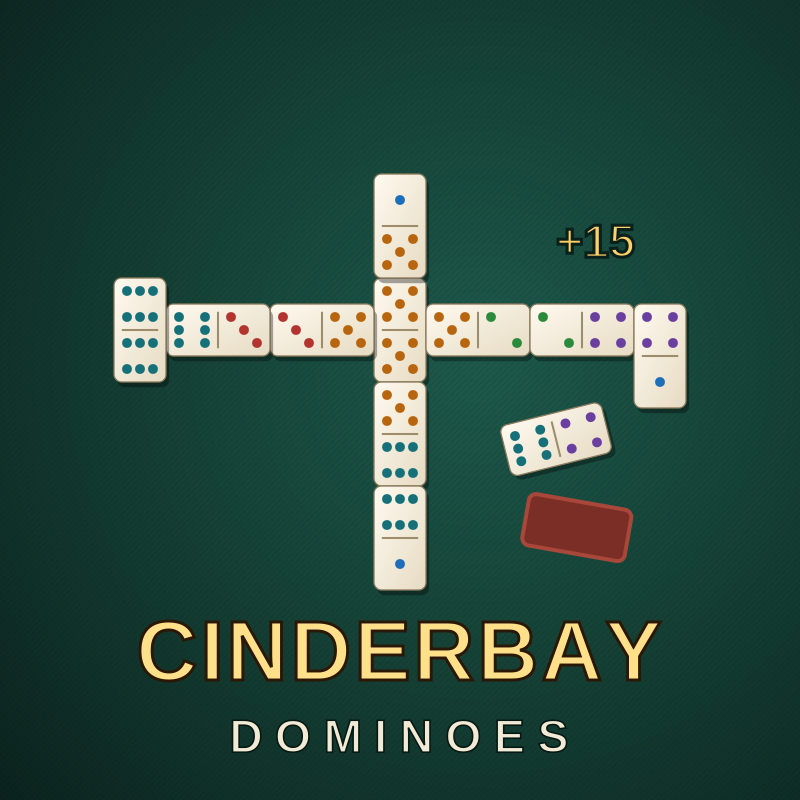
Double-six dominoes for two: the Draw game, the Block game and All Fives with the spinner, against a four-level computer or a friend on the same device.
- Works on phone
- Saves progress
- Released
- Version 1
- Works on
- Browser (desktop, mobile, tablet)
Cinderbay Dominoes game guide
How to play Cinderbay Dominoes
- Keyboard and mouse
- Touch
- Choose your opponent, the computer's level, the game (Draw, Block or All Fives) and the target score.
- On your turn, tap a lit tile in your hand, then one of the lit ends on the table. A tile that fits only one end is played at once.
- When no tile fits, draw from the boneyard (Draw and All Fives) or pass (Block, or an empty boneyard).
- Score points at the end of each hand, and in All Fives during play, until someone reaches the target.
Controls
- Mouse / touch: tap a tile, then a lit end; or drag a tile onto an end; tap the boneyard to draw
- Keyboard: left and right ←↑↓→ choose a tile, Enter or Space picks it, the ←↑↓→ then choose an end and Enter plays it, Esc cancels
- D: draw or pass, H: hint, S: sort your tiles
- P: pause, M: mute
Cinderbay Dominoes tips and strategy
- Play heavy tiles early. If the hand blocks or your rival goes out, every pip left in your hand counts against you.
- Keep a variety of numbers. That way you can follow whichever end is left open.
- Watch what your rival draws or passes on. Those numbers are probably missing from their hand, so leave them open.
- Hunt for fives in All Fives. Look for plays that make the ends total 10, 15 or 20, and avoid leaving an easy multiple of five for your rival.
- Shed doubles when you can. A double matches only one number, so it is easy to get stuck with.
- Use the lit ends. The lit tiles and ends show what can be played, and the number needed is shown on each end.
- Climb the levels. Each level beats the one below it, so Expert is a real test once Hard feels comfortable.
About Cinderbay Dominoes
Cinderbay Dominoes is the classic double-six tile game for two players. Match the ends of the line, block your rival and be the first to lay your last tile. Play against the computer on Easy, Medium, Hard or Expert, or pass the device between two players: a handover screen keeps each hand hidden.
Hard counts every tile that has been played and remembers which numbers you could not follow when you drew or passed. Expert adds search: it deals out many possible hands for you that fit everything it has seen, plays each of its candidate moves to the end of the hand, and picks the one that does best on average.
The rules
- A double-six set has 28 tiles. Each player takes seven; the other fourteen lie face down as the boneyard.
- In the first hand the player with the highest double leads it (with no double out, the heaviest tile). Later hands are led by the winner of the last hand with any tile; after a tied blocked hand the other player leads.
- Players take turns adding one tile to an open end. The touching halves must show the same number. Doubles are laid crosswise.
- Draw game: when no tile fits you draw from the boneyard, one tile at a time, until one fits; with the boneyard empty you pass. You must play when you can.
- Block game: there is no drawing; when no tile fits you pass.
- A hand ends when a player lays their last tile and scores the pips left in the other hand, or when neither player can move (blocked): then the lighter hand scores the other hand's pips, and equal hands score nothing.
- The first player to reach the target (100 unless you choose 50, 150, 200 or 250) wins the match.
All Fives and the spinner
All Fives uses the Draw game's drawing and passing. After each tile you lay, add up the open ends: if the total is a multiple of five you score it at once. A double lying across an end counts both halves. The first double of the hand is the spinner: once both of its sides hold a tile, its top and bottom open as well, so the line grows in four directions. The spinner counts both halves while it is still an end and nothing once both sides are covered; its top and bottom count only once a tile lies there. Hand-end scores are rounded to the nearest five.
Tips and strategy
- Play heavy tiles early: if the hand blocks or your rival goes out, every pip left in your hand counts against you.
- Keep a variety of numbers so you can follow whatever end is left open.
- Watch what your rival draws or passes on: those numbers are probably missing from their hand, so leave them open.
- In All Fives, look for plays that make the ends total 10, 15 or 20, and avoid leaving an easy multiple of five for your rival.
- Get doubles out of your hand when you can: they only match one number.
Details
- Technology
- HTML5
- Orientation
- Landscape or portrait
- Languages
- English
- Features
- Saves progress · Works on iPhone and iPad
- Controls
- ←
- ↑
- ↓
- →
- Enter
- Space
Cinderbay Dominoes features
- Three games. Draw, Block and All Fives, with exact boneyard drawing, passing and scoring for blocked and played-out hands.
- All Fives with the spinner. Score whenever the open ends total a multiple of five, and let the first double open the line in four directions.
- Four computer levels. Easy, Medium, Hard and Expert. Hard counts tiles and learns what you could not follow, and Expert plays out its candidate moves against many possible hands.
- Two players on one device. A handover screen hides each hand until the next player is ready.
- A match to the score you choose. Play to 50, 100, 150, 200 or 250 points, with hand scores rounded to five in All Fives.
- A table that stays readable. The line snakes, turns and re-zooms to stay clear, down to a 320 px screen, with doubles laid crosswise.
- Plays your way. Tap or drag a tile, or use the keyboard, with the ends you can play lit and the number needed shown.
- Hints and sorting. Ask for a hint or sort your tiles, and use the high-contrast mode if you need it.
- Saved matches and records. The match in progress is saved, and your matches, wins, best winning streak, hands, blocked hands and best scores are kept for each level.
- Works offline. Save it for offline play once it has loaded.
Questions about Cinderbay Dominoes
What is the spinner?
In All Fives the first double played is the spinner. When both of its sides hold a tile, its top and bottom open too, so up to four ends can be played on. Only All Fives uses a spinner; in the Draw and Block games every double is an ordinary end.
How are the ends counted in All Fives?
Add the outer number of the tile at each open end. A double lying across an end counts both halves. The spinner counts both halves while it is still an end, and nothing once both its sides are covered. If the total is 5, 10, 15, 20 and so on, the player who just laid a tile scores it.
What happens when the game is blocked?
When neither player can move, the hand ends. Both hands are counted and the player with fewer pips scores the other player's pips. If both hands hold the same number of pips, nobody scores and the other player leads the next hand.
How strong is the computer?
Easy plays any legal tile. Medium plays its heaviest tile and takes All Fives points. Hard tracks every tile and what you could not follow. Expert also plays each candidate move out against many possible hands that fit what it knows. In our seeded tests each level beats the one below it.
Can two people play on one device?
Yes. Choose Two players. Before each turn a handover screen hides the tiles until the next player is ready, so neither of you sees the other's hand.
Is my game saved?
Yes. A match in progress, your settings and your statistics for each computer level (matches, wins, best winning streak, hands, blocked hands and best scores) are saved, and the menu offers to continue where you left off.
Updates
Version 1Live now
Every update passes our automatic build checks before it goes live.
Guide: Dominoes for beginners: Draw, Block and All Fives rules and strategy
Play on your phone
Point your phone camera at the code to open this game there.