Sorrel Plots
by ZokoGames Studio
Play nowStarts in your browserNo download needed
Sorrel Plots
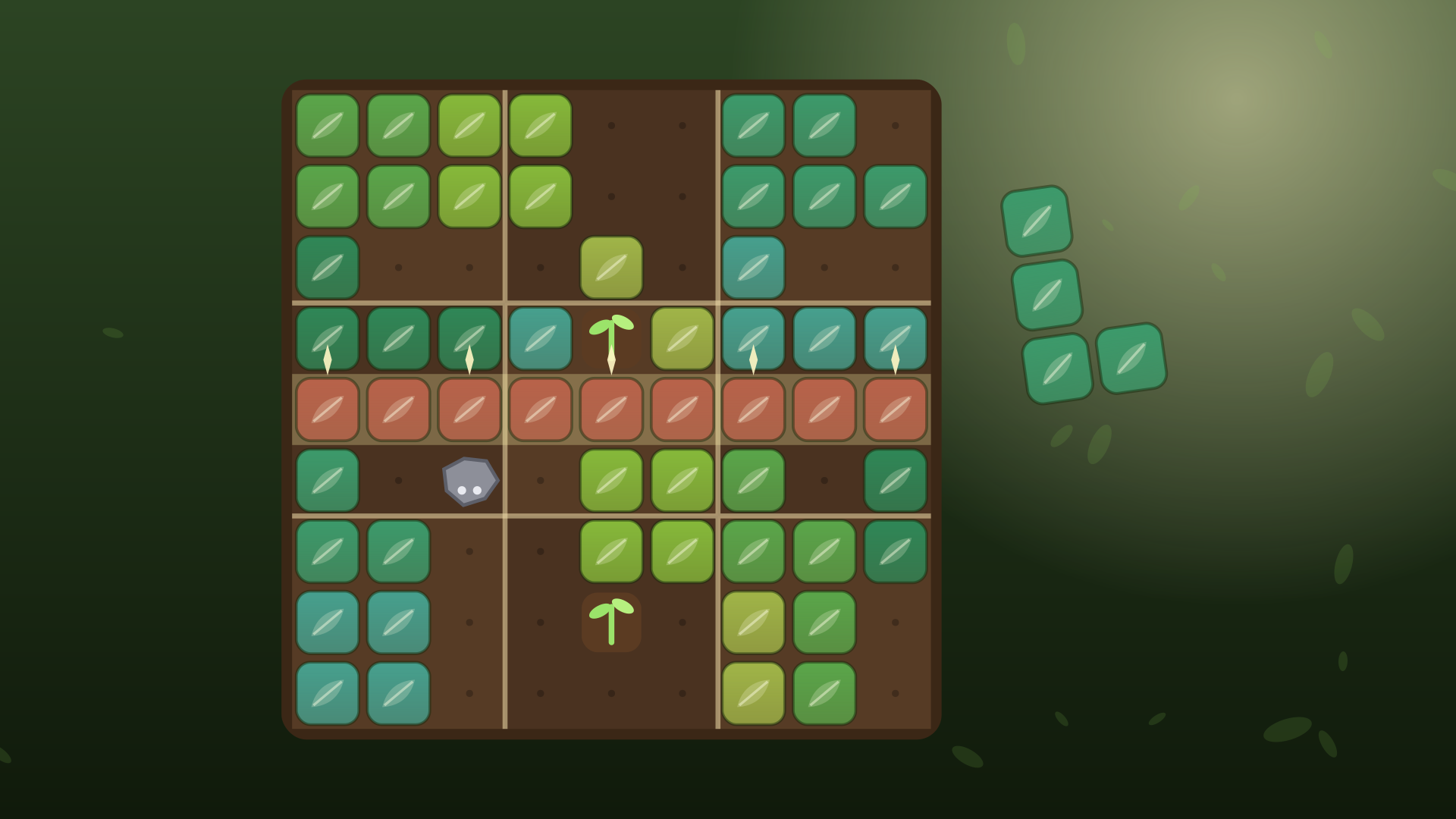
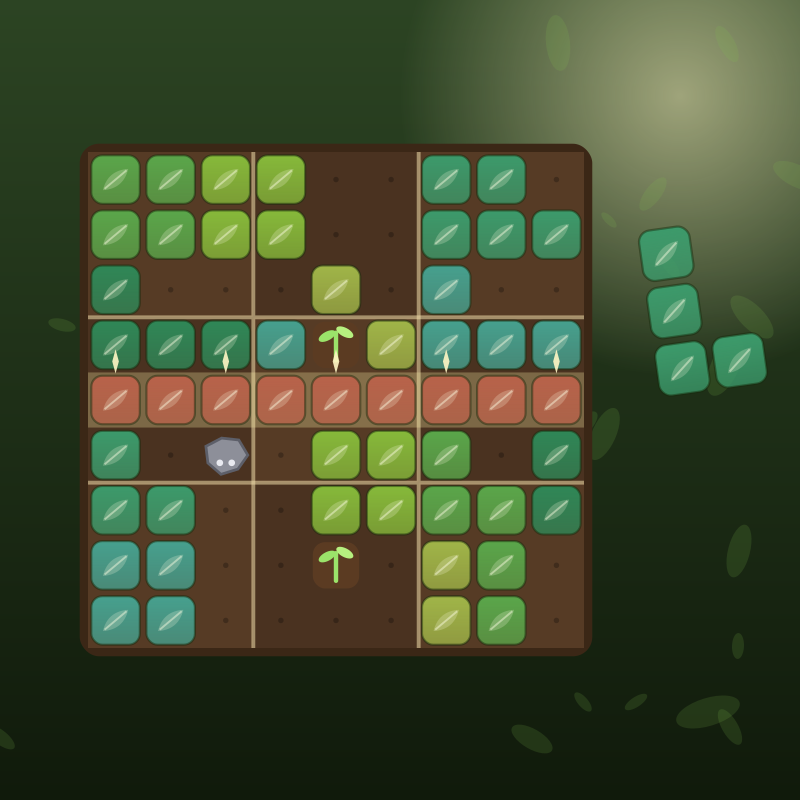
Plant leafy pieces on a 9 x 9 allotment: fill rows, columns and 3 x 3 beds to harvest them, sprout buried seeds and break stones. Classic, a daily plot and a 64-plot Journey.
- Works on phone
- Saves progress
- Released
- Version 1
- Works on
- Browser (desktop, mobile, tablet)
Sorrel Plots game guide
How to play Sorrel Plots
- Keyboard and mouse
- Touch
- Choose Classic, Classic with turning, the Daily plot or a Journey plot.
- Drag a piece from the tray onto the allotment; the outline shows where it lands and the rows, columns and beds it would harvest.
- Fill rows, columns and 3 × 3 beds to harvest them.
- Keep room for the next pieces: the game ends when none of them fits.
Controls
- Touch / mouse: drag a piece onto the plot (on touch screens it is lifted above your finger so you can see where it goes). Or tap a piece, then tap the cell where its middle should go. Drop a piece on the shed to keep it. In turning mode, tap the chosen piece again to turn it.
- Keyboard: 1, 2 and 3 choose a dealt piece and 4 the shed piece; ←↑↓→ move it over the plot; R turns it; Enter or Space plants it; X sends it to the shed; U undoes the last piece; I gives a hint; G reads the plot aloud.
- P / ESC: pause, M: mute
Aids
- Undo takes back the last piece, three times per game or plot.
- Hint shows a good place for one of the pieces.
Accessibility
- Every choice, cursor step and planting is announced to screen readers, with whether the piece fits and how many units it would harvest.
- Read plot lists every row as text.
- Beds, seeds, stones and blocked spots are shown by shape and pattern, not by colour alone. Settings offer high contrast, reduced motion, the harvest preview, lifting the piece above the finger, announcements and vibration.
Sorrel Plots tips and strategy
- Keep one big open area. Leave room for the long rows of five and the full bed of nine, so large pieces always have somewhere to go.
- Complete units together. A piece that finishes a row and a bed at once scores far more than two single harvests.
- Use the shed for awkward pieces. Park the diagonal pair or the clover there and bring them back when a gap fits them.
- Look at all three pieces first. Before you plant, think about the three waiting pieces together and leave room for each of them.
- Plant around stones early. A stone needs two harvests to break, so fill its row or bed more than once.
- Keep the bloom streak alive. Harvest on consecutive plantings to multiply the score. One planting without a harvest is forgiven.
- Use undo and hint. Undo takes back the last piece, three times per game or plot, and Hint shows a good place for a piece.
About Sorrel Plots
Sorrel Plots is a block-planting puzzle set in a kitchen garden. The allotment is a 9 × 9 grid divided into nine beds of 3 × 3. Three leafy pieces are dealt at a time, from a single bud to a full bed of nine. Drag a piece onto empty soil to plant it; once planted, it stays where it is. When a row, a column or a bed is completely planted, it is harvested and its cells are free again. Several units can be harvested by one piece, and a cell that belongs to two of them is cleared once.
When all three pieces are planted, the next three are dealt. The game ends when none of the waiting pieces fits anywhere. Dealing is fair: as long as there is room on the allotment for any piece of the set, at least one of the three dealt pieces fits.
What makes the allotment different
- The shed: one piece can wait in the shed. Drop a piece on it to keep it for later, or swap it with the one that waits there.
- Bloom streak: harvesting on consecutive plantings multiplies the harvest score, up to four times. One planting without a harvest is forgiven; the second in a row ends the streak.
- Seeds: buried seeds fill their cell and sprout when the row, column or bed around them is harvested.
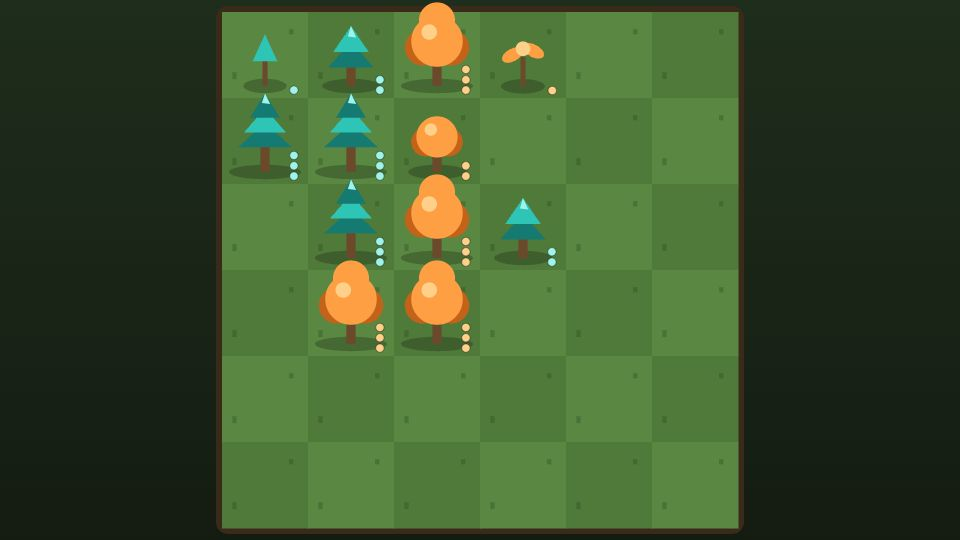
- Stones: a stone fills its cell, survives the first harvest with a crack and breaks on the second. Pips on the stone show how many harvests it can still take.
- Turning mode: in Classic with turning and in the last Journey garden, pieces can be turned a quarter at a time.
Modes
- Classic and Classic with turning: endless, each with its own best score and saved game.
- Daily plot: the same pieces for everyone on the same UTC date. Your first attempt counts for your daily streak and the calendar; replays are practice.
- Journey: 64 plots in four gardens (First Furrows, Seed Rows, Stony Ground and Turning Meadow). Each plot has a goal, such as a score, a number of harvests, sprouting every seed or breaking every stone, within a piece limit. Every plot was played through by a computer player with the same rules, and up to three stars reward a thrifty harvest.
Scoring
Each planted cell scores 1 point. A harvest of one unit scores 20, two units 60, three 120 and four 200, multiplied by the bloom streak (×1.5, ×2, ×2.5 and so on up to ×4). A sprouted seed adds 10 and a broken stone 15.
Tips and strategy
- Keep one large open area so that the long rows of five and the full bed of nine always have room.
- Fill beds and rows together: a piece that completes a row and a bed at once scores far more than two single harvests.
- Use the shed for the awkward pieces, such as the diagonal pair or the clover, and bring them back when a gap fits them.
- Before you plant, look at the three waiting pieces together and leave room for all of them.
- Stones need two harvests: plant around them early so their row or bed fills more than once.
Details
- Technology
- HTML5
- Orientation
- Landscape or portrait
- Languages
- English
- Features
- Saves progress · Works on iPhone and iPad
- Controls
- ←
- ↑
- ↓
- →
- Enter
- Space
- ESC
Sorrel Plots features
- Block planting in a kitchen garden. A 9 x 9 allotment of nine 3 x 3 beds. Drag a piece onto empty soil, and a completed row, column or bed is harvested.
- Fair dealing. As long as any piece of the set still fits, at least one of the three dealt pieces fits.
- The shed. Keep one piece for later, or swap it with the one that waits there.
- Bloom streak. Harvests on consecutive plantings multiply the score, up to four times, and one miss is forgiven.
- Seeds and stones. Buried seeds sprout when their row, column or bed is harvested, and stones break on the second harvest.
- Classic and turning modes. Endless Classic and Classic with turning, each with its own best score and saved game.
- Daily plot. The same pieces for everyone on the same UTC date, with a daily streak and a calendar.
- 64-plot Journey. Four gardens with a goal and a piece limit on every plot, and up to three stars for a thrifty harvest. Each plot was played through by a computer player with the same rules.
- Undo and hints. Take back the last piece three times per game or plot, or ask for a good place for a piece.
- Clear to read. Beds, seeds, stones and blocked spots use shape and pattern, not colour alone, with high contrast, reduced motion and a harvest preview in Settings.
- Plays with any input. Touch, mouse or keyboard, with every step announced for screen readers and a Read plot list. Works offline.
Questions about Sorrel Plots
How is Sorrel Plots different from other block puzzles?
The allotment harvests beds as well as rows and columns, a shed keeps one piece for later, harvests in a row build a bloom streak with one miss forgiven, and Journey plots add buried seeds to sprout and stones that need two harvests. There is also a turning mode.
Can the game deal me pieces that never fit?
Not while there is room. Whenever any piece of the set would still fit somewhere, at least one of the three dealt pieces fits. The game ends only when none of the waiting pieces, the shed included, has a place.
Is the Daily plot the same for everyone?
Yes. The pieces come from a sequence seeded by the UTC date, so the same plantings give the same pieces for every player that day. Your first attempt counts for your streak; replays are practice.
Are all Journey plots possible?
Yes. Each plot was played to its goal by a computer player using the game's own rules and the plot's fixed pieces. Its piece count sets the three-star mark, and the piece limit leaves plenty of room on top.
Can I undo a move?
Yes, the last piece, three times per game or Journey plot. When a Classic game ends you can also shake the seed bag once for a fresh set of pieces, either free or by watching an ad, depending on where you play.
Can I play with a keyboard or a screen reader?
Yes. Number keys pick a piece, the arrow keys move it, Enter plants it, and every step is announced, including whether the piece fits and what it would harvest. Read plot lists the whole allotment row by row.
Updates
Version 1Live now
Every update passes our automatic build checks before it goes live.
Guide: Block-placing puzzle strategy: keeping the board open, combos and when to hold a piece
Play on your phone
Point your phone camera at the code to open this game there.