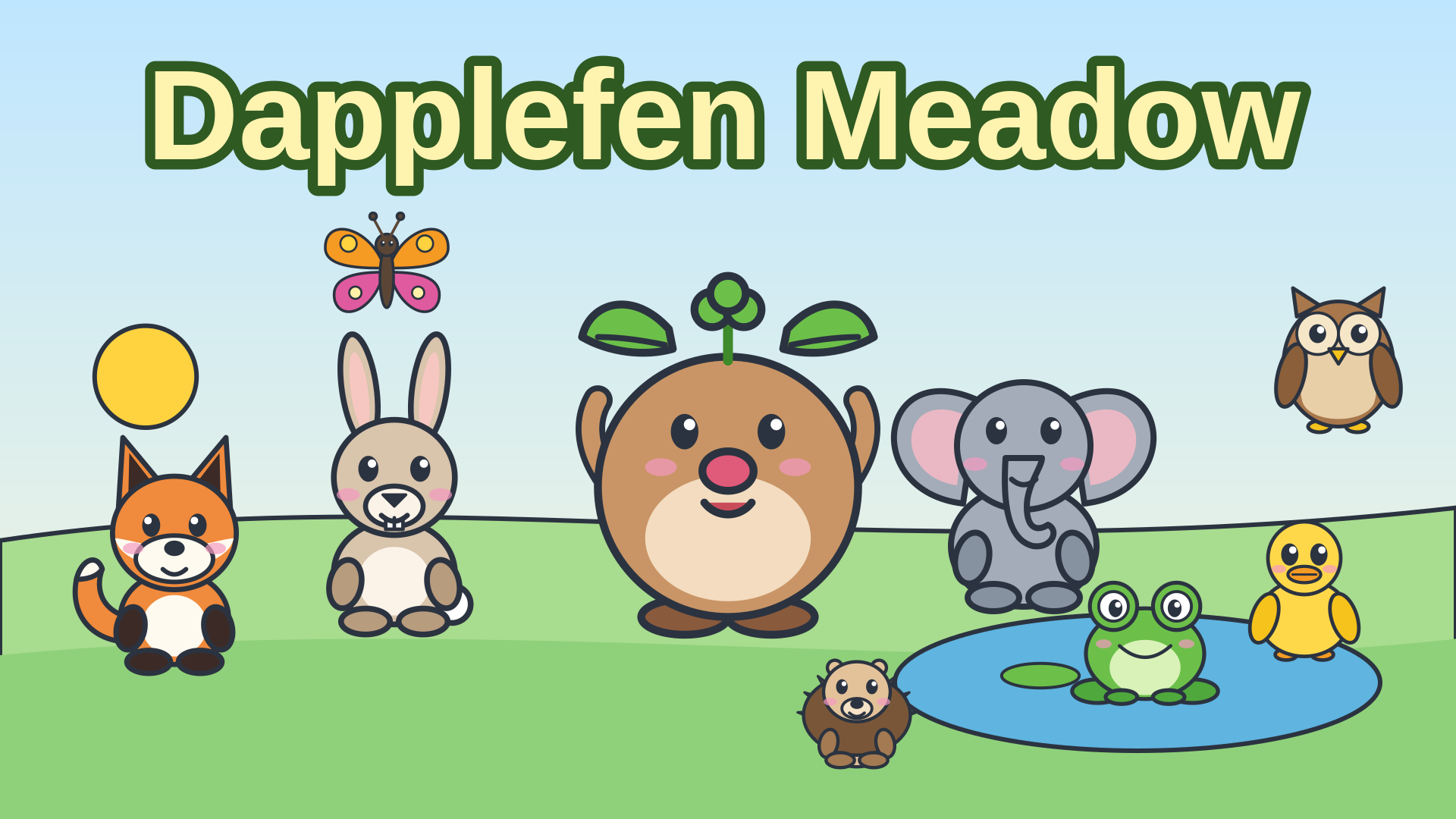
Dapplefen Meadow
by ZokoGames Studio
Play nowStarts in your browserNo download needed
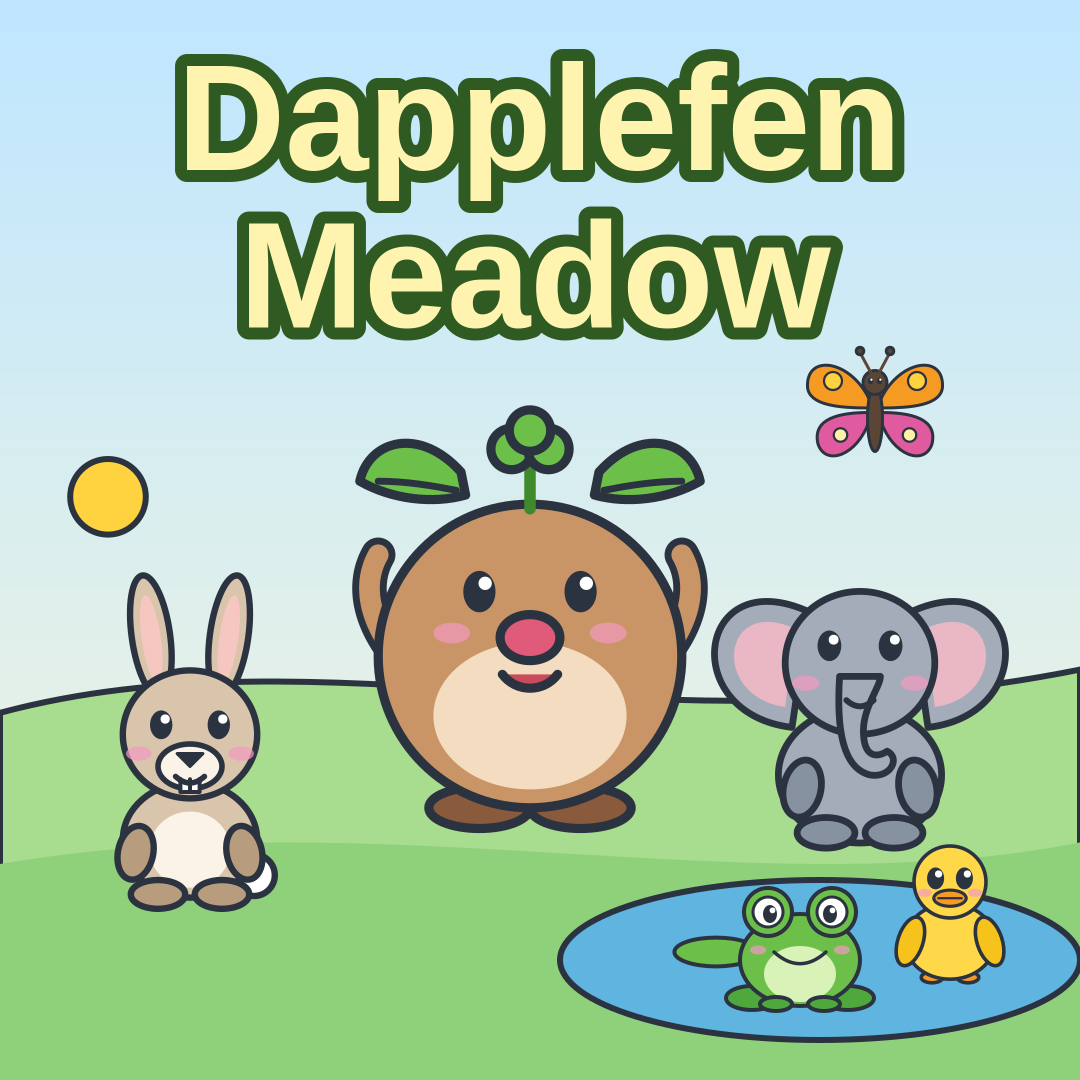
An animal and nature playroom for ages 3 to 8: animal homes, animal sounds, babies, who is hiding, what animals eat and sticker scenes with Pemmet. No ads, no timers.
- Works on phone
- Saves progress
- Released
- Version 1
- Works on
- Browser (desktop, mobile, tablet)
Dapplefen Meadow game guide
How to play Dapplefen Meadow
- Keyboard and mouse
- Touch
- Tap Play, then tap a picture to choose an activity.
- Tap the speaker to hear the instruction again and the hand to see how it is done.
- Animal homes: drag an animal onto its home, or tap the animal and then its home.
- Animal sounds: tap the ear to hear the call again (or the eye to watch the moving friend again), then tap the animal.
- Babies, Who is hiding? and Feed the animals: tap the right picture.
- Sticker scene: drag a sticker onto the picture or tap it to add it; tap a placed sticker to resize, turn or remove it, and drag it to move it.
- Keyboard: ←↑↓→ move between buttons (and move a chosen sticker in the scene), Space or Enter chooses, Delete removes a chosen sticker; H shows how, R repeats the instruction, M mutes.
- Grown-ups: press and hold the lock for three seconds to open the parent corner.
Dapplefen Meadow tips and strategy
- Play alongside at first. Sit with your child for the first rounds. Tap the hand to see how an activity works, and let your child do the tapping.
- Let wrong tries be fine. A wrong answer gets a gentle wiggle, and after a second try the right one is shown. There are no lives, timers or scores to lose, so there is no reason to hurry.
- Talk about the animals. After a round, ask where the animal lives, what it eats or what its baby is called. The game keeps its facts simple and true, so you can build on them together.
- Look for the whole from a part. In Who is hiding? point out the ear, tail or shadow shape together before your child taps the animal.
- End with a sticker scene. Every round ends with an animal sticker. Place, move, turn and resize stickers on four backgrounds and invite your child to tell the story of the scene.
- Let the level find itself. An activity moves up after four good rounds out of the last five and back down after three hard ones out of the last four. In the parent corner you can fix one level for all activities instead.
- Try visual-only mode. In the parent corner it turns sound off, and Animal sounds becomes Who moves like this?, for a quiet room or a child who is deaf or hard of hearing.
About Dapplefen Meadow
Dapplefen Meadow is a gentle animal and nature playroom for children aged about 3 to 8. Pemmet, a round hazel field-mole with leaf ears and a clover sprout, shows them around 39 friendly animals drawn by the game, from frogs and hedgehogs to whales, penguins and giraffes. Every screen uses large pictures, a short instruction that can be read aloud, and an animated hand that shows what to do, so a child who cannot read yet can play alone.
What children practise
- Animal homes: drag each animal to where it lives: pond, forest, farm, sea, sky or savannah. It builds early science vocabulary and sorting by a rule. A wrong home simply sends the animal back, and after two tries the right home glows.
- Animal sounds: hear a playful, made-up call and pick the animal that makes it, for listening and attention. For deaf or hard-of-hearing children, or with the sound off, it becomes “Who moves like this?”: a little friend hops, waddles, swims or flutters the way the animal moves.
- Babies: match a baby to its grown-up, including tadpoles, caterpillars and chicks, for observation and life-cycle ideas.
- Who is hiding?: part of an animal, or its shadow, peeks out from behind a bush, a rock or a log. It trains visual reasoning and recognising a whole from a part.
- Feed the animals: what does it eat? The facts are kept simple and true: the right food is one the animal really eats, and the other foods shown are ones it does not.
- Sticker scene: every round ends with an animal sticker. Stickers can be placed, moved, turned and resized freely on four backgrounds, for creative play and storytelling.
Made to be calm, and made for every child
There are no lives, no timers and no scores. A wrong answer gets a gentle wiggle; after a second try the right one is shown. Stickers are never scarce: once found, a sticker can be used again and again. Difficulty adapts per activity, from two choices to four, and from half of an animal in colour to a small piece of its shadow. Pictures always carry their own shapes and words, so nothing depends on colour alone; the game works with a keyboard or switch, supports screen readers and respects reduced-motion settings.
For parents
A parent corner sits behind a three-second press and a multiplication question. In it you can fix the level, switch activities off, turn read-aloud and visual-only mode on or off, and see a plain summary of progress. Dapplefen Meadow shows no ads, asks for no purchases, has no chat, no links and no leaderboards, and never uses the microphone. No data about your child is collected: progress, stickers and sticker scenes stay in the game's own save on this device.
Details
- Technology
- HTML5
- Orientation
- Landscape or portrait
- Age rating
- All ages
- Languages
- English
- Features
- Saves progress · Family friendly · Works on iPhone and iPad
- Controls
- ←
- ↑
- ↓
- →
- Space
Dapplefen Meadow features
- Six animal activities. Animal homes, animal sounds, babies, who is hiding, feed the animals and a sticker scene, with Pemmet the field-mole, for children aged about 3 to 8.
- 39 friendly animals. From frogs and hedgehogs to whales, penguins and giraffes, all drawn by the game.
- Animal homes. Drag each animal to where it lives: pond, forest, farm, sea, sky or savannah, for early science vocabulary and sorting by a rule.
- Animal sounds. Hear a playful, made-up call and pick the animal that makes it, for listening and attention. These are not recordings.
- Babies, hiding and feeding. Match babies to grown-ups, recognise an animal from a part or its shadow, and choose what an animal eats. The facts are kept simple and true.
- No reading needed. Large pictures, a short instruction that can be read aloud, and an animated hand that shows what to do.
- Calm by design. No lives, no timers and no scores. Difficulty adapts per activity, from two choices to four, and stickers can be used again and again.
- Made for every child. Pictures carry their own shapes and words, so nothing depends on colour alone. A visual-only mode turns sound off for deaf or hard-of-hearing children.
- No ads, nothing collected. No ads of any kind, no purchases, no chat, no links and no leaderboards. The microphone is never used, no data about your child is collected, and progress, stickers and scenes stay in the game's own save on this device.
- A parent corner. Behind a three-second press and a multiplication question: fix the level, switch activities off, turn read-aloud and visual-only mode on or off and see a plain summary of progress.
- Easy to use for everyone. Works with touch, mouse, keyboard or switch, supports screen readers and respects reduced-motion settings. Works offline once loaded.
Questions about Dapplefen Meadow
What age is Dapplefen Meadow for?
It is made for children from about 3 to 8. Every activity has three levels: from two pictures to choose from and half of an animal in colour, up to four pictures, small shadow peeks and boards with four homes and six animals.
Does my child need to read?
No. Every activity uses pictures, a short instruction that can be read aloud by the device and an animated hand that shows what to do. Read-aloud uses the device's own voices and can be switched off in the parent corner.
Are there ads, purchases or data collection?
No. Dapplefen Meadow shows no ads of any kind, has no purchases, no chat, no links to other sites and no leaderboards, and never uses the microphone. Nothing about your child is collected; progress, stickers and sticker scenes stay in the game's own save.
Can a deaf or hard-of-hearing child play?
Yes. Turn on visual-only mode in the parent corner: the game makes no sound and Animal sounds becomes Who moves like this?, where a little friend moves the way the animal moves. The other activities never need sound.
Are the animal facts correct?
They are kept simple and true. In Feed the animals the right food is one the animal really eats, and the other foods shown are ones it does not; meat eaters are left out. Homes accept only places where the animal really lives, and the animal sounds are playful made-up calls, not recordings.
How does the difficulty change?
Each activity moves up a level after four good rounds out of the last five and back down after three hard ones out of the last four. In the parent corner you can fix one level for all activities instead.
Updates
Version 1Live now
Every update passes our automatic build checks before it goes live.
Guide: Animal and nature play for young children: a guide for parents
Made for kids
Rated for all ages. Every game suggested on this page is a kids game too.